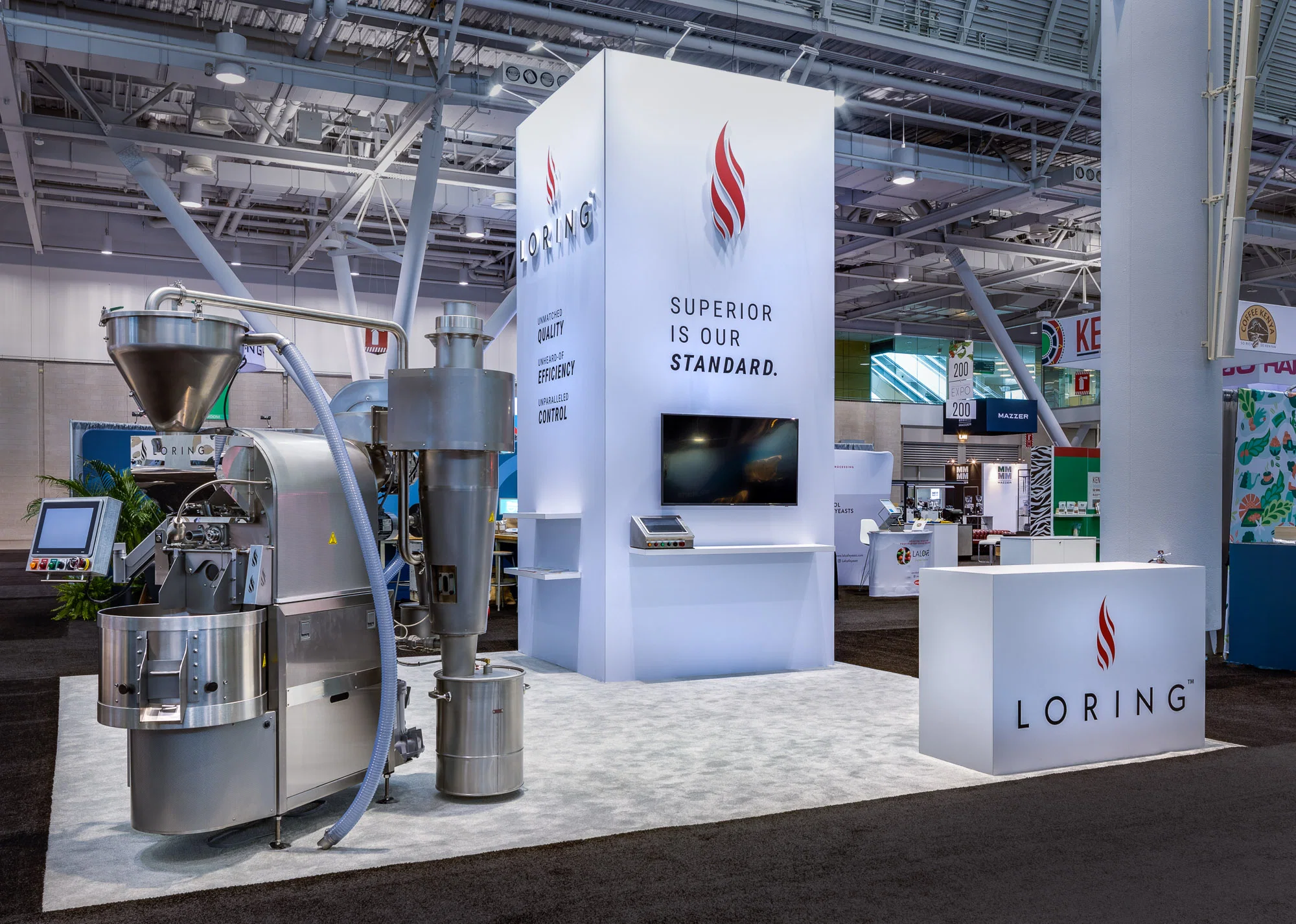
Early planning also protects the budget.
The same discipline improves repeatability.
Island Exhibit Booths execution priorities
- Build Island Exhibit Booths around sightlines, freight practicality, labor hours, demo behavior, and reuse value together.
- Define structure, graphics, electrical, rigging, and storage requirements before production begins.
- Use venue limits and organizer rules to confirm what can be hung, powered, or staged in the footprint.
- Sequence flooring, structure, graphics, and technical work to avoid floor congestion.
- Carry asset recovery, refurbishment, and future reuse into the first budget conversation.
Grand Rapids venues we work
the plan has to match the specific building.
Courtyard by Marriott Grand Rapids Downtown is one of the anchors. The property has 10 event rooms and 10,639 square feet of total event space.
Courtyard by Marriott Grand Rapids Downtown suits downtown breakout programs, room blocks, small conferences, convention overflow.
Embassy Suites by Hilton Grand Rapids Downtown.
Operational rules on the Grand Rapids floor
Grand Rapids Public Museum — GRPM's rental section and guidelines say outside entertainment and rental items must be approved through the museum's Hospitality Office and that food service must use pre-authorized caterers.
Practical planning rules for the booths in Grand Rapids: Grand Rapids venue rules change by property, organizer, and event format. For DeVos Place programs, exhibitors should expect advance planning documents, named service partners, and campus-specific coordination requirements.
Where Grand Rapids shows cluster
Bridge Street, Heartside, West Side, Medical Mile form the Downtown Activation Belt cluster. Walkable hospitality, social-district activity, offsite venues, museums, and branding-friendly neighborhood texture around the core.
North Monroe and River Corridor runs across North Monroe, Belknap, Sixth Street. Overflow meetings, suite inventory, restaurants, parks, and a calmer district just north of the main convention campus.
Scope on a island exhibit booths project
The handoffs on an the booths project matter almost as much as the line items. Design has to hand a build-ready drawing to fabrication. Every handoff is a place quality can drop.
Scope boundary is as important as scope inclusion.
What an engagement actually looks like
Venue coordination comes next.
Install days are owned by a single on-site lead.
During show hours, the booth is a live operating space.
That document drives the next booking.
What it costs and how fast it moves
Cost scales with how it is built, how big it is, what the venue charges for its own services, what the graphics look like, how far the crates travel, and how many days the team stays on-site.
Lead time drives everything. Custom: 16 to 20 weeks. Rental: 8 to 12.
What a successful project looks like
Trade show ROI is measured at the lead and pipeline level.
A week after the show, the booth's actual floor performance is already clearer than any pre-show projection. We document those observations alongside the technical closeout so the next cycle inherits real signal, not nostalgia.
How we're built to run your project
Trade Show Services of Grand Rapids keeps the work local.
The difference from a national vendor shows up at the dock.
The Grand Rapids event landscape
Grand Rapids is a working trade show market.
Trade show weeks in Grand Rapids compress decisions.
Questions about Island Exhibit Booths
Do you work at Leona Road?
Yes.
How does labor work in Grand Rapids?
It runs venue by venue.
How much lead time is ideal?
Custom builds run best with 16 to 20 weeks of lead time. Rentals take 8 to 12 weeks.
What information kicks off a project?
The show, the venue, the booth number, the dates, and a target budget range. From those, an initial scope and a realistic cost come back within a few days.
Who runs the booth on-site?
One named show-site lead runs the install, the show hours, and the strike. That person carries the floor plan and the punch list from crates to doors and reports up once a day.
Can the booth travel to the next city on our calendar?
Same structure, swappable graphics, standard crates.
What happens if something breaks during show hours?
The on-site lead handles it.